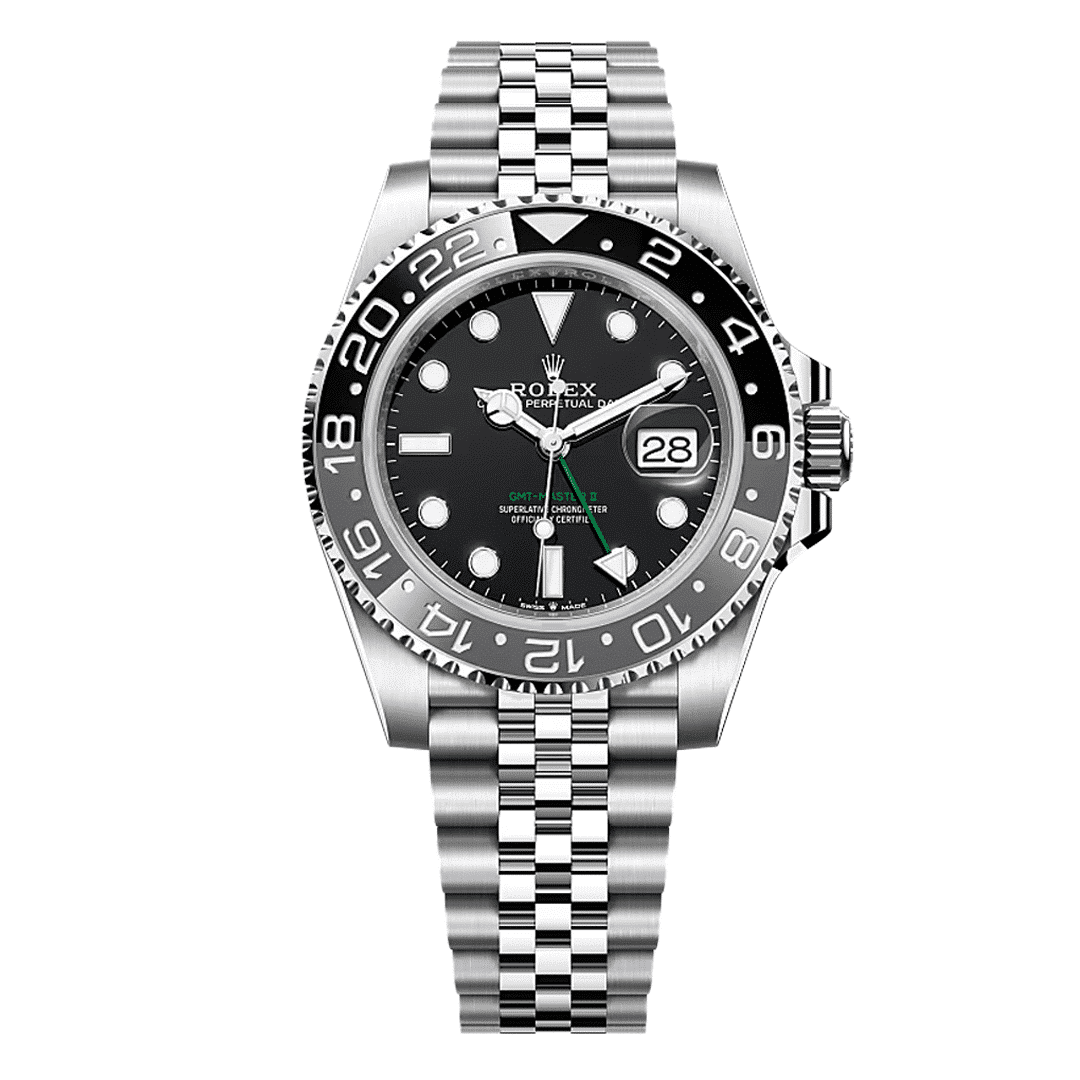
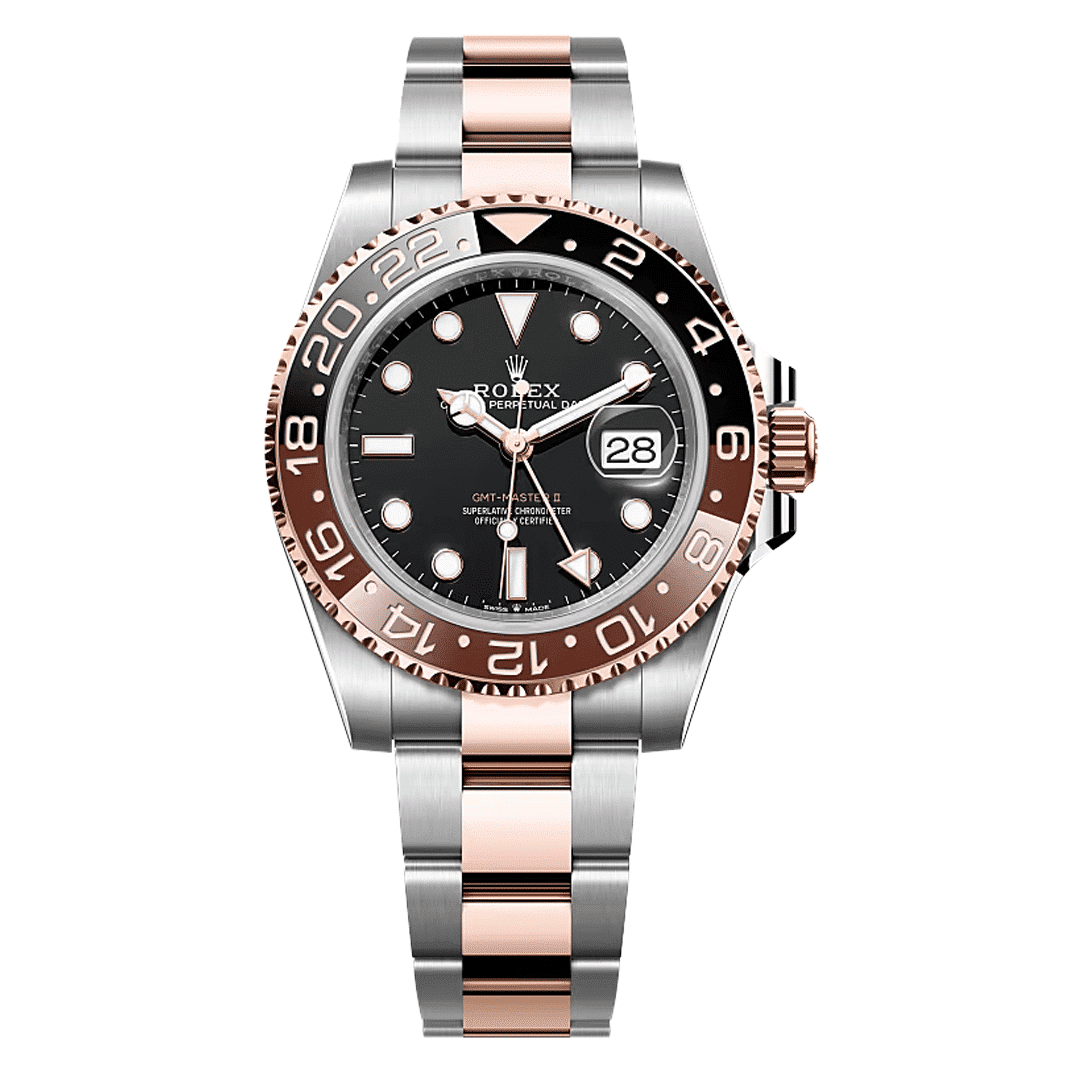
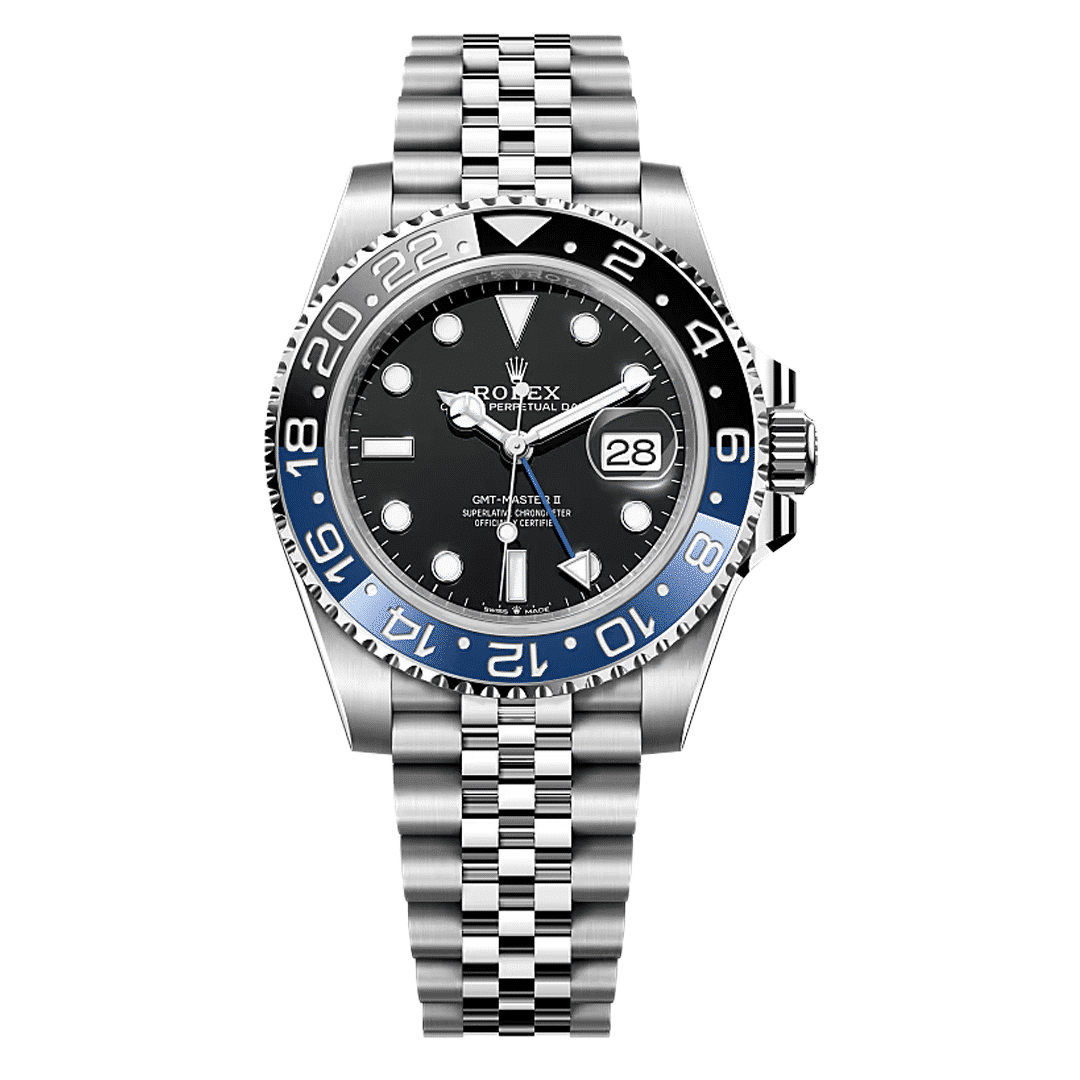
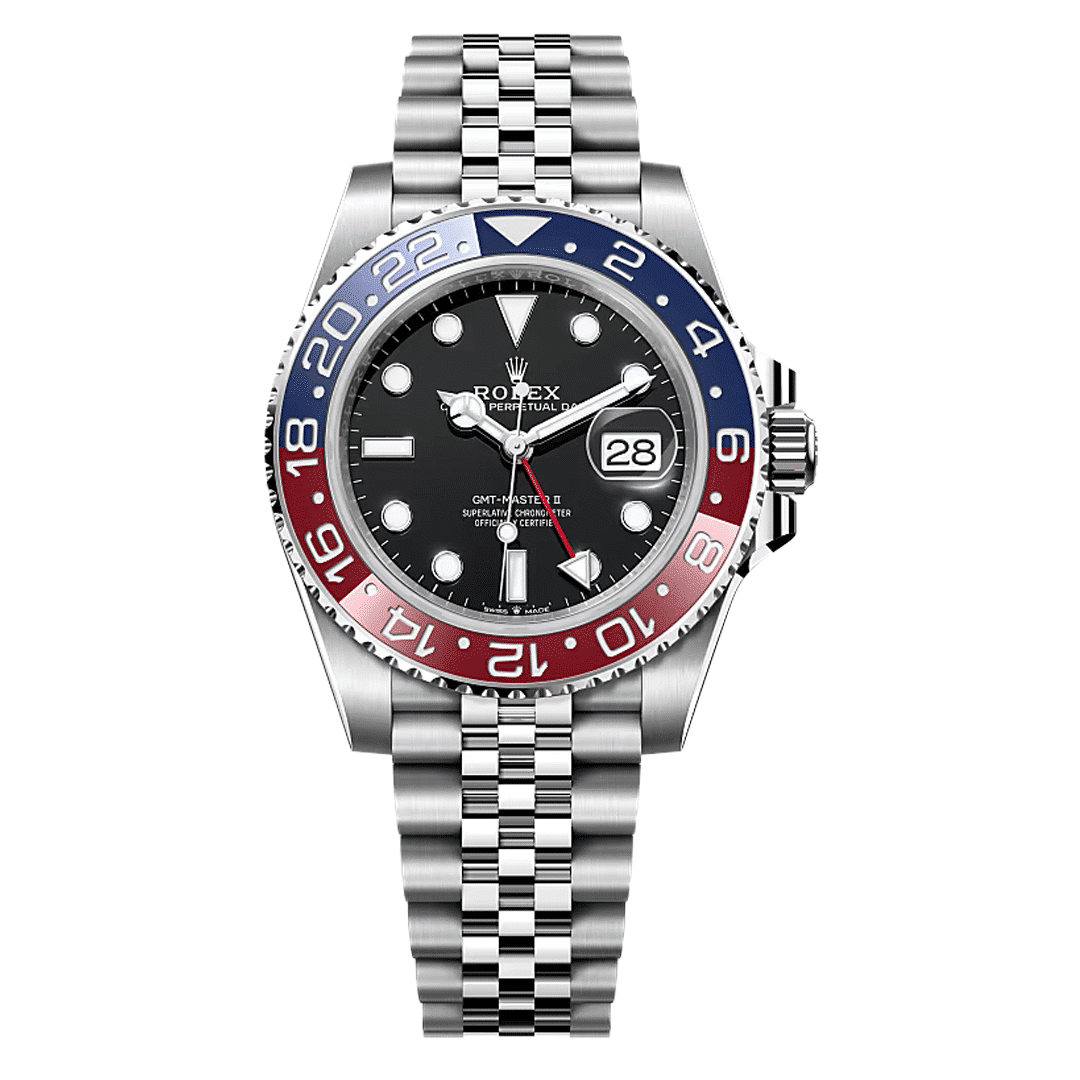
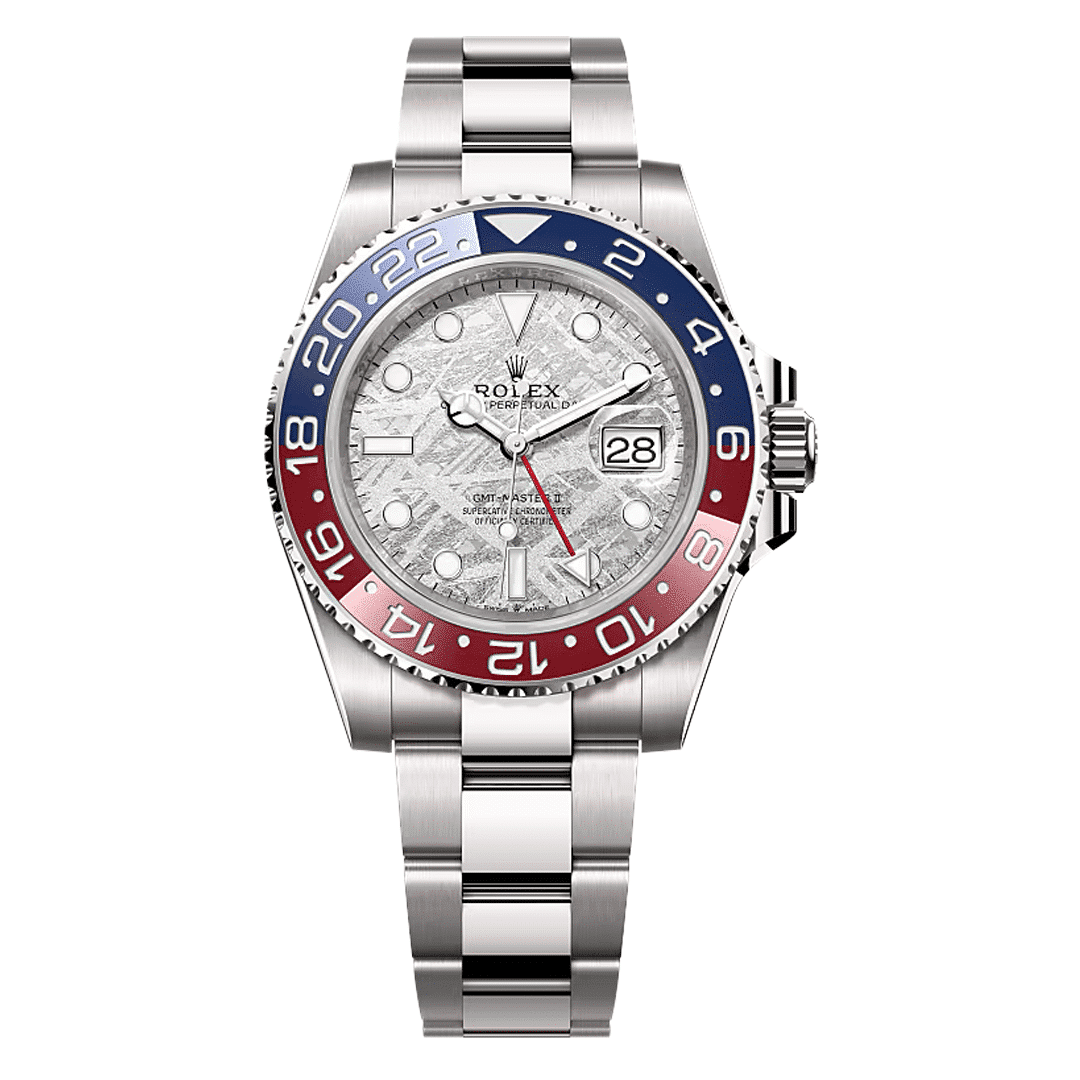
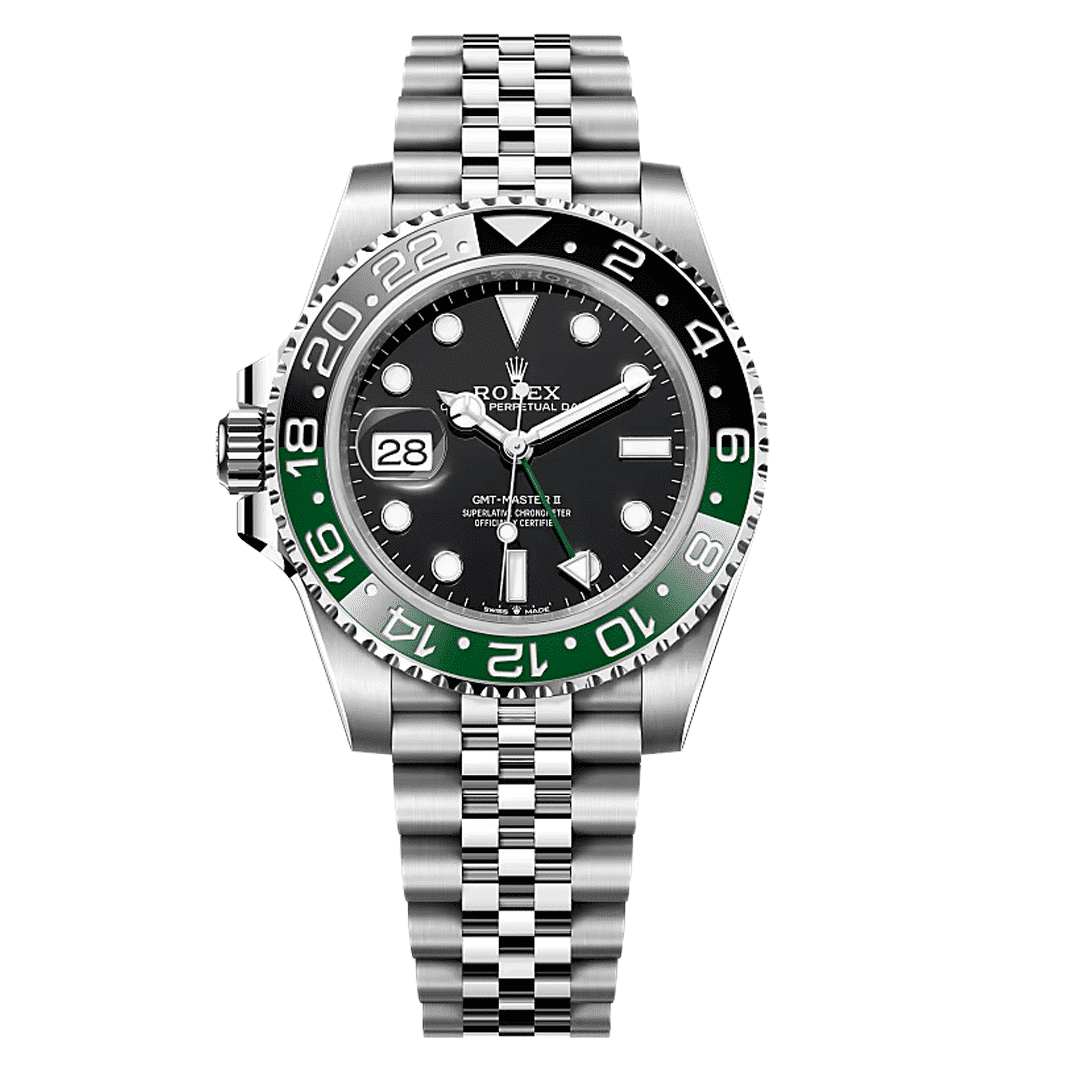
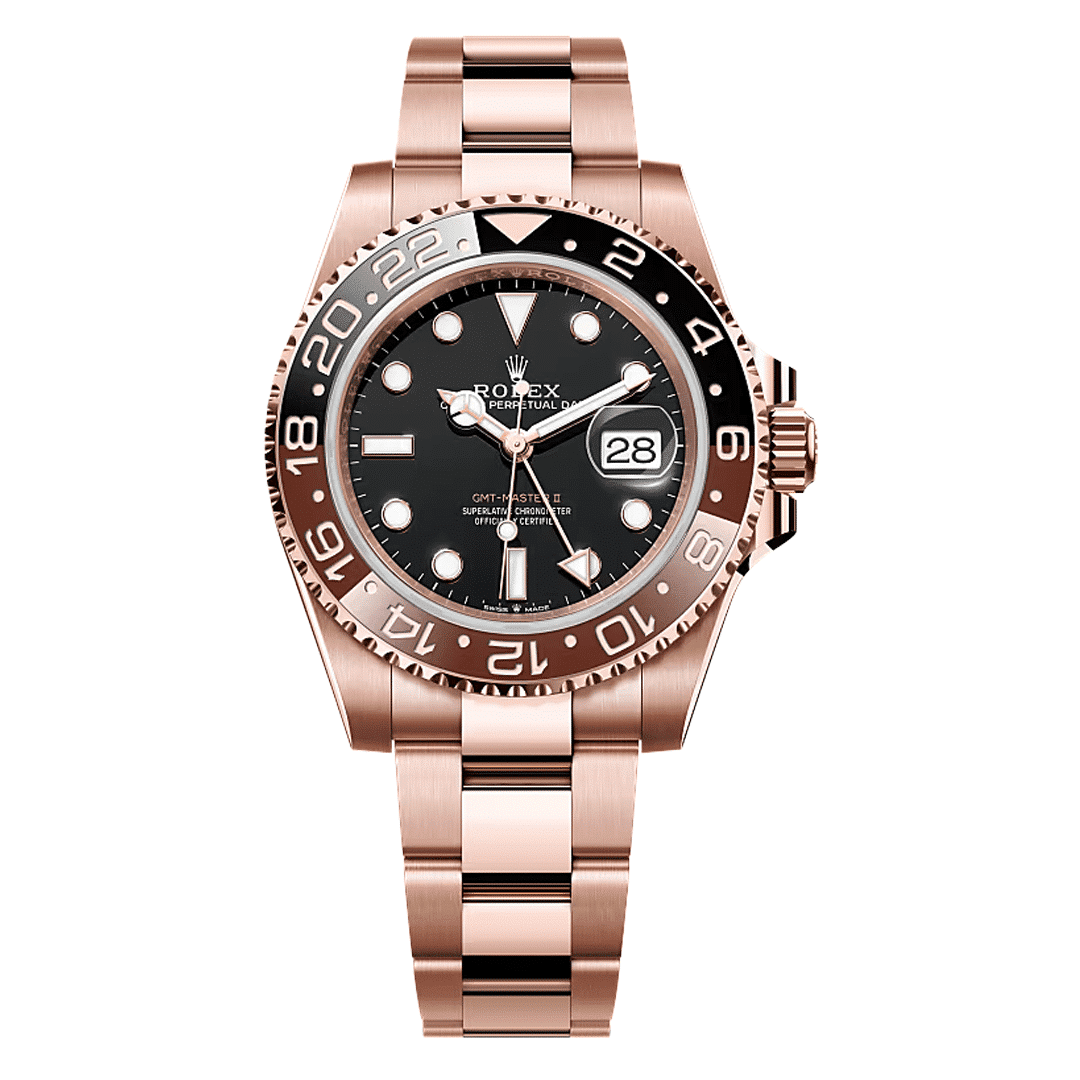
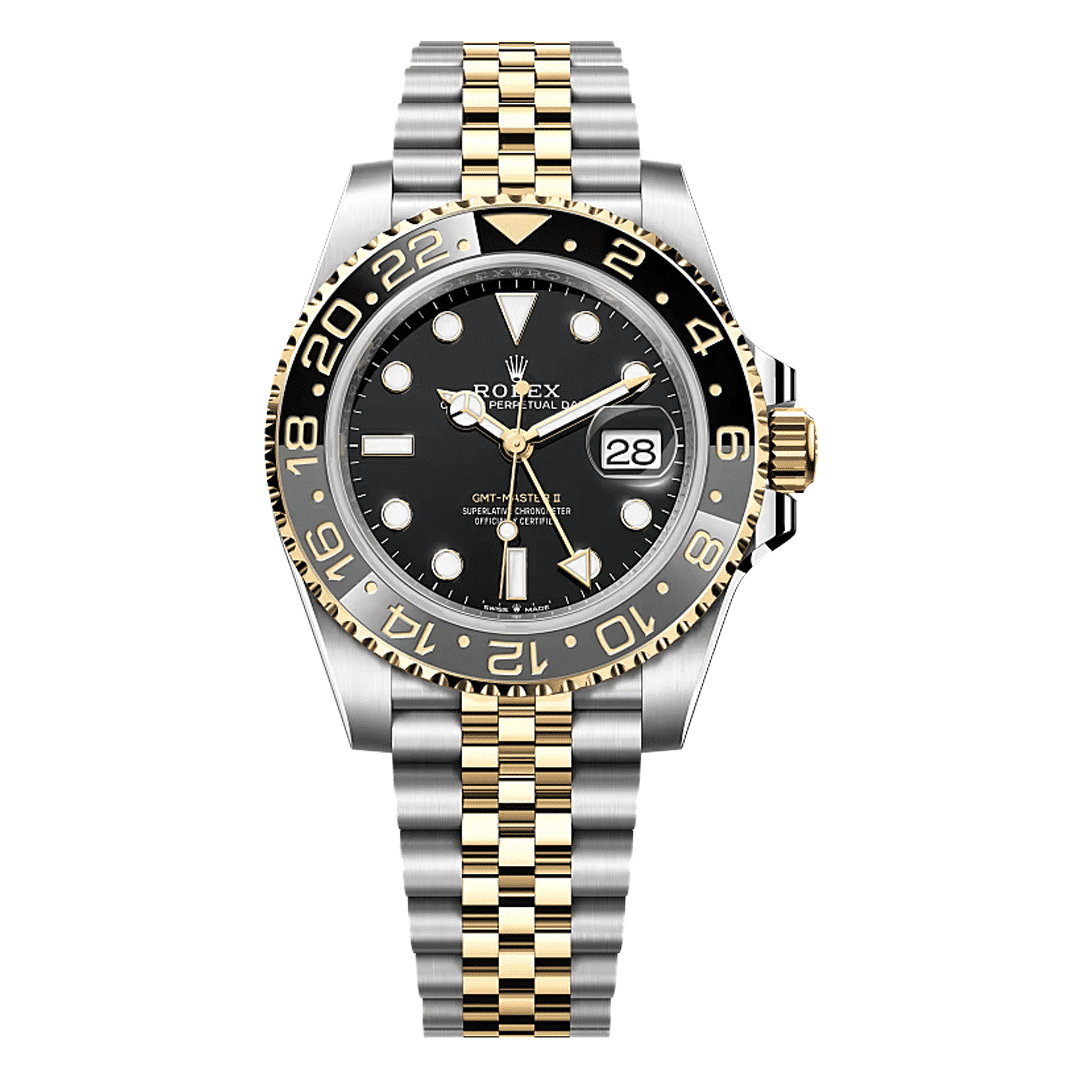
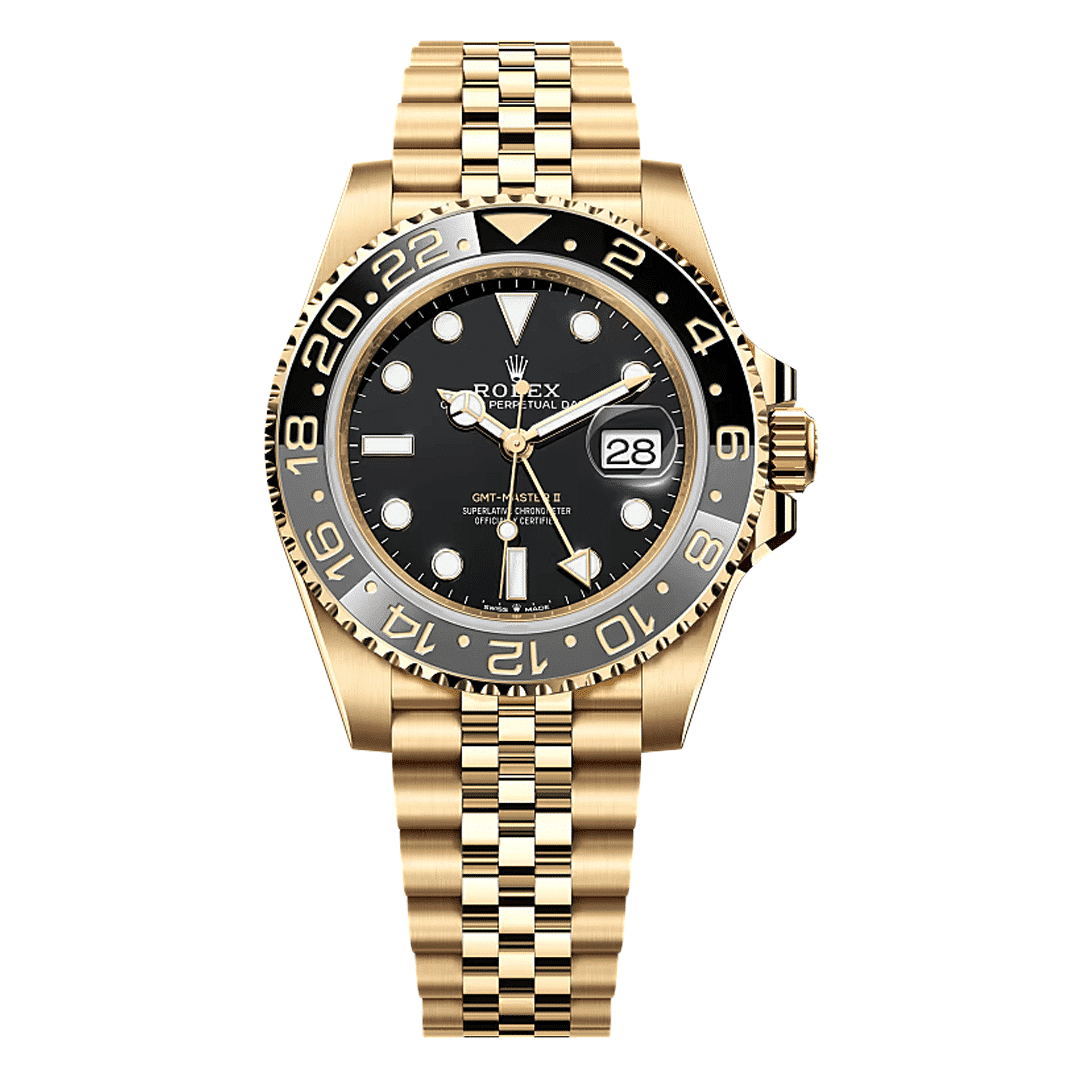
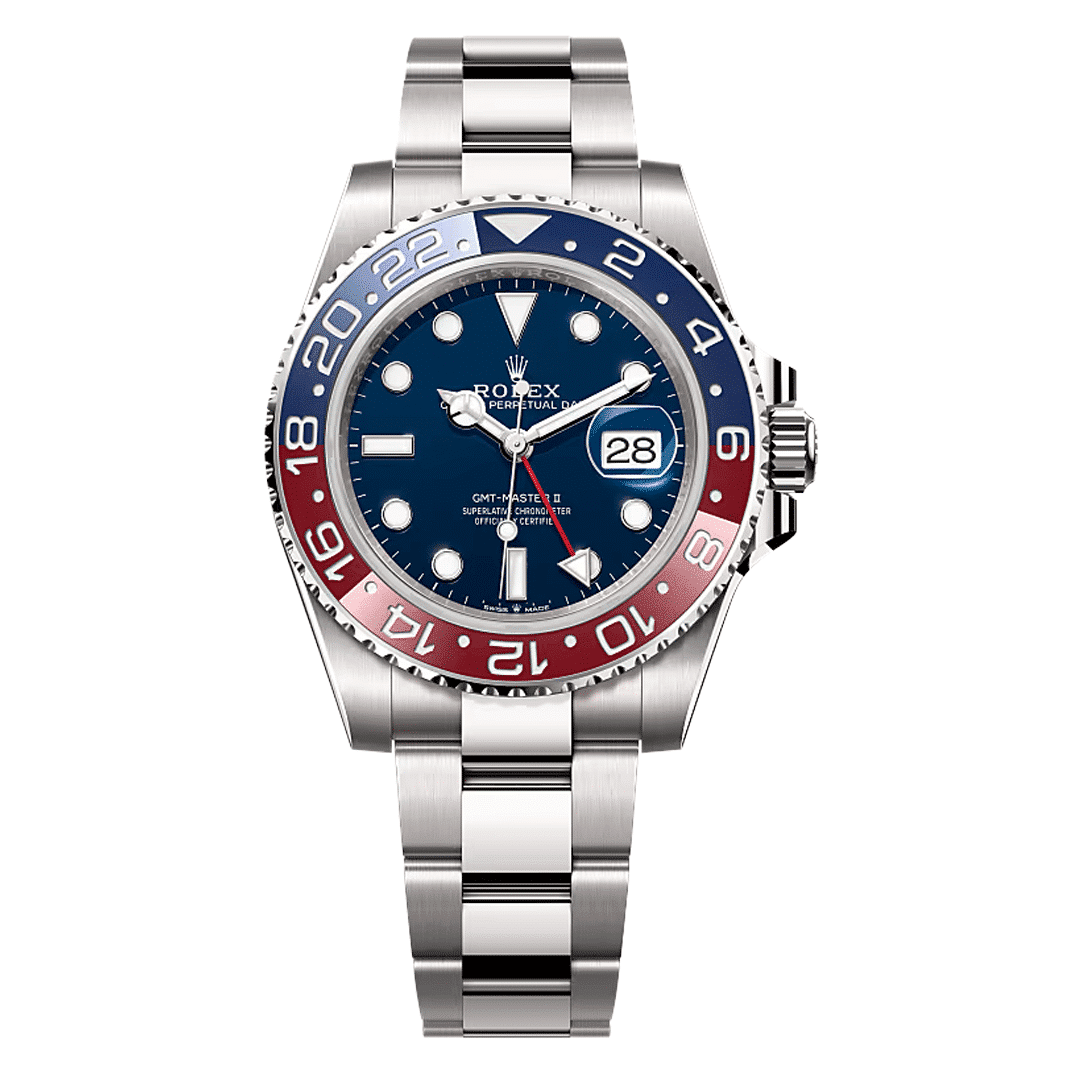
The Rolex GMT-Master II is defined by two things: a functional fourth hand that tracks a second time zone on a 24-hour scale, and a two-tone ceramic Cerachrom bezel that makes it the most colour-coded watch Rolex makes. The Pepsi (red-blue), Batman (black-blue), Sprite (green-black), and the all-black references each carry an immediate visual identity — and each requires correct colour separation at the bezel midpoint to look right. A GMT-Master clone that fails on bezel colour or a non-functional GMT hand is not a GMT-Master; it is a Submariner with an extra hand.
The movement is a self-winding GMT automatic with an independently adjustable 24-hour GMT hand and a quickset local hour that advances in 1-hour jumps without stopping the seconds hand. This last feature — the 'hack and jump' hour — is important: it means the traveller can correct the local hour one click at a time when crossing time zones, without resetting the running seconds. The clone GMT movement in a quality GMT super clone replicates this function correctly, with a crisp, detented feel on the hour jump.
The two-tone Cerachrom bezel on the GMT-Master II is a manufacturing challenge Rolex solved with a two-piece ceramic sintering process — the two colours are genuine ceramic fused at the midpoint, not a surface finish that wears through. The dividing line between the two colours runs precisely through the 12/24 position. On a super clone GMT, this join is matched in the same ceramic material, and the colour density is checked: a faded or milky red (on the Pepsi) is an immediate tell on a cheaper fake.
The GMT case runs 40mm across all current steel variants, with an Oyster bracelet and the distinctive sculpted crown-guard that protects the crown at 3 o'clock. The bracelet uses a Glidelock clasp (shared with the Submariner) for tool-free length adjustment. The dial typography on the GMT-Master is distinctive — 'GMT-MASTER II' printed beneath the logo in two lines — and the 24-hour hand runs a correct arrow head in the reference colour.
Rolex produces the GMT in steel, two-tone (Rolesor), and full gold (Everose). The super clone catalog covers the steel variants in all four bezel colours; the Rolesor and Everose references are available in select batches. The Batman — steel with black-blue ceramic — has been the most-requested reference since Rolex discontinued the steel Pepsi for several years; many collectors prefer it as a daily-wear over the brighter Pepsi colour scheme.